The Backstory of Outside ABCs

When persistence paid off

I am a rare author who grew up as a reluctant reader. To this day, my reading preference is for children’s literature, which is what I write. I remember enjoying theme-writing in my senior English class. There was something about writing on what I cared about that appealed to me. 

I also wrote a few poems in high school. A classmate challenged me to write a few stanzas on a poem she had started. That was fun, so I wrote a few more poems. Since my father taught science and English in high school, I showed him my poems. He pointed out so many things that were wrong with them that I decided writing poetry was too hard, and I would never write them.

That decision held true for 25-30 years. One day my husband insisted that I write a poem to accompany a wedding gift we were giving to a friend. After many protests, an inspiration came to me for the poem. I started to write it trying hard to avoid the mistakes my father had pointed out in my high school poems. To my surprise, I was pleased with the poem. Furthermore, my friend had my poem framed and hung it on her wall. (I’ll get back to poems after a brief rabbit trail.)

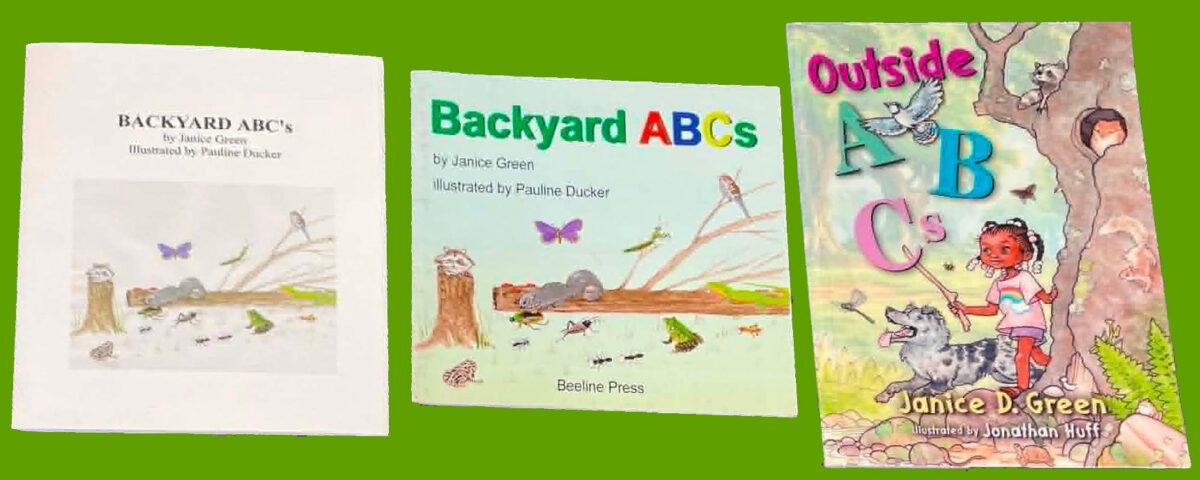
In the meantime I had been working on an alphabet book I called Backyard ABCs. I learned about what makes a good alphabet book in one of my university Library classes, and this book idea came to me. That was in the late 1980s. I tried to think of the many things that were easy to find in nature that might go into an alphabet book. I even discovered my “X” in the now eXtinct Xerces butterfly. That first manuscript was loaded with ideas – too many ideas for a picture book.

I found a copy of A Field Guide to Little Known & Seldom Seen Birds of N.A. by John Sill that impressed me. With an online search, I found John Sill and called him on the phone. He graciously agreed to look at my manuscript. Then he gave me some excellent advice on how to simplify the pages.

As I worked on my manuscript, I discovered the computer software, Microsoft Publisher and wondered if I could print my own book. My mother enjoyed painting nature scenes with animals and birds. If Mom could paint my illustrations, I could create and print the book on my computer. In a few months we produced a copies of Backyard ABCs. My text was only a brief line about the images in the picture.

After feeling the success from writing that first poem for my friend, I tried writing poems for the pages of Backyard ABCs. Again, we printed out several copies on my ink jet printer, folded and stapled them.

But there was a problem. The amount of time spent printing the books and the cost of the paper and ink brought the profit down to less then minimum wages to even print the copies.

Several months later I discovered Lulu.com. Using Photoshop, I polished up Mom’s pictures and ordered a few copies of Backyard ABCs through Lulu.com which were sold to family and friends.

In 2009 I attended the Florida Christian Writers Conference where I met Crystal Bowman on the last day of the conference in a small group wrap-up discussion at the end of the day. She noticed my Lulu copy in the pocket of my notebook and asked to look at it. I’ll never forget her emphatic question: “Did you show this to anyone?!?” I confessed that I hadn’t because I felt it wouldn’t measure up to the publishers standards.

Long story short, Crystal mentored me as we worked on the manuscript. We struggled to improve the poems that needed to match the pictures. Acknowledging that the original illustrations could not be used, I decided to start from scratch choosing different topics for most of the pages and writing new poems expecting that illustrations would follow. That was a game changer. Eventually the revised manuscript was ready for submission.

I hate writing book proposals, and the whole submission process, so I only submitted it a couple of times. Then the manuscript lay dormant a couple more years. 

In God’s timing, I was encouraged to submit the new Outside ABCs manuscript to Ambassador International, and they quickly accepted it. Also, in God’s timing, my extremely gifted grandson, Jonathan Huff, was mature enough and ready to illustrate the book. I was persistent with Ambassador International about hiring him as my illustrator, and they agreed to let him try.

Jonathan and I are delighted with the finished book. Outside ABCs released in April 2026. 

A side note for the authors who attended the BRMCWC in 2026, and who will understand this concept: This book qualifies as a “41” book from concept to completion. For those who were not at the BRMCWC , consider the many things that arrived at turning points after a 40 year wait in the Bible.

Flower Doll from an Althea Bush

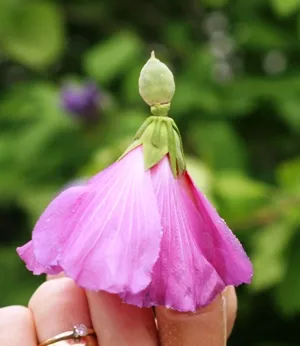
When I was a little girl in Indiana my aunt showed me how to make a doll from the flower of the Althea Rose of Sharon bush. It grew in the front yard of our farm. The petals made a lovely long dress and the doll’s head was the unopened bud of another flower. A few years ago we were visiting my husband’s family in upstate New York when I noticed the same flowers blooming all around and took advantage of the opportunity to make one again.

To make this flower doll:

Continue reading “Flower Doll from an Althea Bush”

Outside ABCs by Janice D. Green, ill by Jonathan Huff

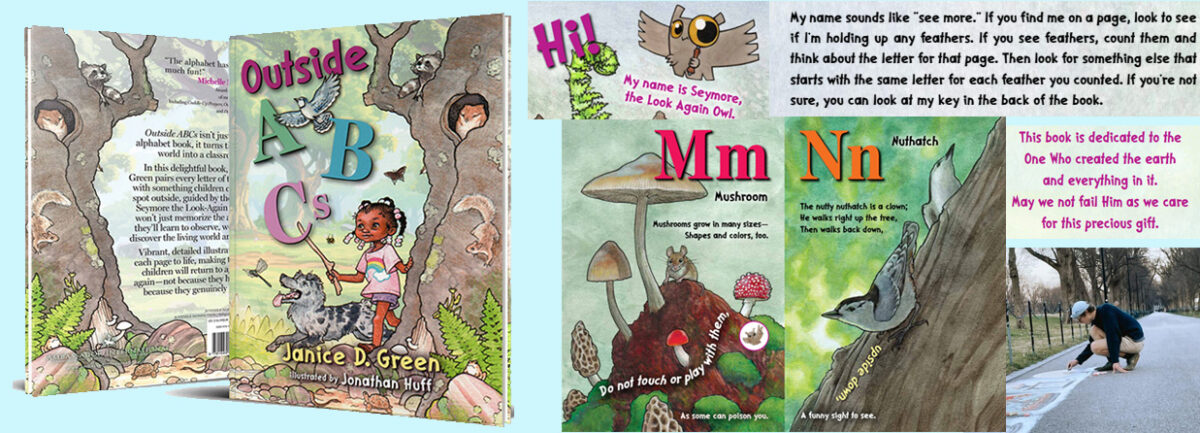
I am beside myself with excitement! Outside ABCs released in April 2026. My gifted grandson, Jonathan Huff, is the illustrator.

These are the fantastic endorsements that were written about the book, even before Jonathan Huff’s amazing images and Ambassador International’s whimsical layouts were applied:

“As kids follow the alphabet, they will not only learn interesting facts about nature, they will also be inspired to explore the great outdoors. Did you know fiddleheads are a sign of spring and that velvet ants are wasps? Written in whimsical rhythm and rhyme, Outside ABCs is interesting, educational, and fun to read. The illustrations are creative, bright, and colorful and will capture the attention of every child who opens the book.” —Crystal Bowman (who also has had a chance to preview the completed PDF file with completed layout)

“The alphabet has never been so much fun! Janice Green’s Outside ABCs is a wonderful alphabet book, teaching children so many fun facts all written in effortless rhyme. The author’s descriptive language and rhythmic writing make this book a great addition to any library.” —Michelle Medlock Adams

Continue reading “Outside ABCs by Janice D. Green, ill by Jonathan Huff”

C is for Crawfish or Crawdad

This post was originally written for Christian Children’s Authors blog. I needed a post for April 17. When I discovered that April 17th was National Crawfish Day, I knew it was time to check off one thing that had been on my bucket list for years – to catch a crawdad in a crawdad hole.

Everyone knows about finding crawdads in creeks and ditches, but did you know you could catch one in a hole in the ground with a string and some bacon?

Many years ago when my now-grown daughter (Jonathan’s mom) was very young we saw several funny looking chimneys made of mud in our back yard. Not knowing what they were, we asked around and were told that they were made by crawdads that lived under the ground. I often wondered if I could catch one with some bait on a string, but I never got around to trying it. Many years later in a different home in a different town, I noticed mud chimneys in our ditch.

It was time to find out if it really worked. Check out my pictures!

    The image on the left is a crawdad chimney from the back yard. The center picture shows me fishing in a crawdad hole in my front yard where I got more nibbles. Notice that not all crawdad holes have mud chimneys around them. The third picture is the crawdad I caught. Since only one wasn’t enough for a meal, I released it back into its hole along with the leftover scrap of bacon. It deserved at least that for all his/her troubles trying to eat it.

    These freshwater critters go by many names: crayfish, crawfish, crawdads, craydads, crawdaddies, mudbugs, and yabbies. All are classified as crustaceans and are very similar to shrimp. The crayfish found in holes like the ones in my yard are referred to as burrowing crayfish. They are found in many parts of the USA in low lying moist ground where the water table is close to the surface.

    Burrowing crayfish are nocturnal, so unless you coax them out of hiding with some bait on a string, you probably won’t see one. They dig their burrows in wet soil and pile up little mud balls on the top of the ground around their hole to make their mud chimneys. I like to think of burrowing crayfish as little knights in armor, and the mud chimneys are their castles.

    It took me about three hours to catch my crawdad. If I’d been smarter, I would have looked on YouTube first. I would have found this video made by nitro3899 telling how to catch them. I might have caught mine and maybe a couple more in about a half an hour. I didn’t know to fill the hole with water or to grab the crawdad with needle nose pliers. My crawdad wouldn’t stay on the bait all the way out of the hole, until I eventually wore him out.

    Now that you know what to look for, keep some string and needle nosed pliers handy for when you chance to find some mud chimneys. You can use any kind of meat on your string. Your children or grandchildren will love the adventure.

    Have you tried this with your children? Tell me about it in the comments below.

    #outsideabcs


    Celebrations! Outside ABCs is about to release!

    The word is out. Outside ABCs will release on April 21, 2026. I am so excited! Jonathan Huff’s illustrations and the layout are outstanding. Jonathan is my grandson, and I am so proud! I am eager to receive my pre-ordered copies.
    You can pre-order your copies at this link on Ambassador International’s bookstore website.